





Katana
Katana: The Deceptive Trap of Samurai Combat
Many players approach Katana with the naive assumption that this is merely a simple reaction-based arcade title. You see the screen, you see the enemies, and you think your reflexes alone will carry you to victory. This is the first trap the game sets for the unsuspecting warrior. In reality, Katana demands a deep understanding of rhythm and spatial awareness that goes far beyond basic clicking.
The core loop of Katana feels deceptively accessible, yet it hides a brutal difficulty curve beneath its minimalist aesthetic. To truly dominate, you must stop treating every encounter as a frantic button-mashing session. Instead, view the gameplay as a calculated dance where every swing of your blade is a commitment. Miscalculating your range in Katana will lead to a swift screen-reset, forcing you to restart the encounter from square one.
Understanding the Engine Telemetry
| System Metric | Operational Specification |
|---|---|
| Developer | Shok Games |
| Core Input | Left Click (Melee), Right Click (Ranged) |
| Engine Architecture | HTML5 / Unity WebGL |
| Primary Loop | Predictive Strike & Parry |
When you step into the world of Katana, your primary goal is to maintain momentum. The game engine is designed to punish hesitation. If you stand still for even a fraction of a second, the AI-controlled threats will capitalize on your inactivity. Success in Katana requires you to internalize the timing of your character's strike animation, ensuring that your blade connects exactly when the enemy's guard is dropped.
Pro-Tip: Never engage multiple targets simultaneously from the front. Use your movement keys to circle-strafe and isolate individual enemies to keep your Katana duels manageable.
Unveiling the Hidden Lethal Traps
The environment within Katana is not just a backdrop; it is an active participant in your demise. Many players fail because they ignore the subtle cues embedded in the level design. The game frequently places hazards that look like decorative elements but are actually lethal zones. You must learn to read the visual language of Katana to survive the later stages of the campaign.
Strategic Engagement Mechanics
To master the art of survival in Katana, you need to diversify your combat approach. Relying solely on the melee swing is a recipe for disaster when ranged enemies appear. Effective players utilize the following tactics to stay alive:
- Positioning: Always keep your back to a clear path to facilitate rapid retreats.
- Resource Management: Time your shuriken throws to interrupt enemy attack animations in Katana.
- Pattern Recognition: Observe the flashing indicators that signal an incoming strike from off-screen foes.
The beauty of Katana lies in how it forces you to adapt. You cannot simply brute-force your way through the levels. Each stage in Katana introduces new enemy types with unique attack patterns that require different timing windows. By failing, you learn the specific rhythm required to overcome these hurdles. It is a classic trial-and-error experience that rewards patience and observation above all else.
Analyzing Enemy AI Behavior
The adversaries you face in Katana possess a surprising amount of tactical depth. They do not just rush you blindly; they attempt to flank and overwhelm your position. When playing Katana, you must prioritize threats based on their proximity and their ability to deal damage. A single missed swing with your Katana can leave you vulnerable to a counter-attack that depletes your health bar rapidly.
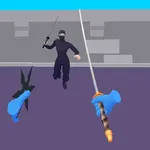
Advanced players of Katana often use their shurikens not just for damage, but for crowd control. By tagging an enemy from a distance, you can stagger them, creating an opening to close the gap and finish them with a clean Katana strike. This synergy between your primary and secondary inputs is what separates the novices from the veterans in this challenging browser-based title.
Mastering the Blade Through Muscle Memory
The final hurdle in Katana is the transition from conscious thought to instinct. You must reach a point where your fingers move across the mouse buttons without requiring active deliberation. This level of mastery is essential for the high-intensity boss encounters that punctuate the later levels of Katana. When the screen fills with projectiles and enemies, your muscle memory becomes your only reliable ally.
The Path to Samurai Mastery
Developing this intuition takes time and deliberate practice. Do not get discouraged if you find yourself dying repeatedly in Katana; every death is a lesson in timing. Focus on the audio-visual feedback provided by the game engine. The sound of your Katana hitting steel or flesh provides critical information about whether your timing was precise or slightly off-beat.
As you progress through the ranks of Katana, you will notice that the game begins to feel like a flowing conversation between you and the combat system. You anticipate the enemy's movement, and your Katana is already in position to strike. This state of flow is the ultimate goal for any serious gamer looking to conquer the challenges found within the world of Katana. Keep practicing, keep observing, and eventually, the blade will become an extension of your own intent.
The journey to becoming a legend in Katana is long, but the satisfaction of a perfect run is unparalleled. Whether you are playing for a quick session or trying to climb the leaderboard, remember that every mistake in Katana is an opportunity to refine your technique. Stay sharp, stay focused, and let your instincts guide your hand as you navigate the treacherous paths of this addictive game.
Frequently Asked Questions About Katana
How can I effectively counter enemies that block my Katana strikes?
To bypass enemy blocks in Katana, you must wait for the exact moment the enemy transitions from their defensive stance to an attacking animation. Use your shuriken throw to force an opening if they remain in a defensive state for too long, then immediately follow up with a decisive Katana strike.
Why does my character keep dying when I try to attack in Katana?
Your character is likely vulnerable because you are over-committing to your attacks. In Katana, every swing has a recovery window. If you swing your Katana recklessly without checking your positioning, enemies will exploit the gap in your defense. Focus on single, precise strikes rather than spamming your mouse buttons.
Is there a trick to aiming the shuriken in Katana?
Aiming in Katana is less about precise cursor placement and more about predictive positioning. Since enemies move in set patterns, try to throw your shuriken where the enemy is going to be, rather than where they currently are. This anticipatory play is key to mastering the ranged mechanics of Katana.
Ultimately, Katana is a testament to the idea that simple mechanics, when executed with precision and depth, can create an incredibly engaging experience. By respecting the difficulty and focusing on the core rhythm of the combat, you will find that Katana offers a rewarding challenge that keeps you coming back for just one more attempt. Embrace the discipline of the samurai, and you will surely find success in this intense, browser-based arena.